The African milk tree stands as a tall reminder that I’m not in Kansas anymore. I mean, I’m not in Kansas at all. I’m back in South Africa, looking for elephants.
There’s a moment that feels almost electric; a euphorbia tree comes into view and something inside me shifts: a rush of a sense of belonging; an earthy sweetness in the air that smells of dust and possibility; a tingling anticipation of reunion with the magnificent beings we’re here to observe.
The tree is the threshold; the elephants are the reason we cross it.
We venture out that first afternoon to see what we bump into. Not literally, of course. We’re here 5 months after collars were removed from 2 of the matriarchs, so we have to find them the old fashioned way. We’re here 5 months after we field-tested the first version of an elephant ID app that has the potential to fundamentally change the way we identify individuals in the field. We’re here to mesh science with wonder; to bring the future into the field; to follow their footsteps, and to observe and learn.
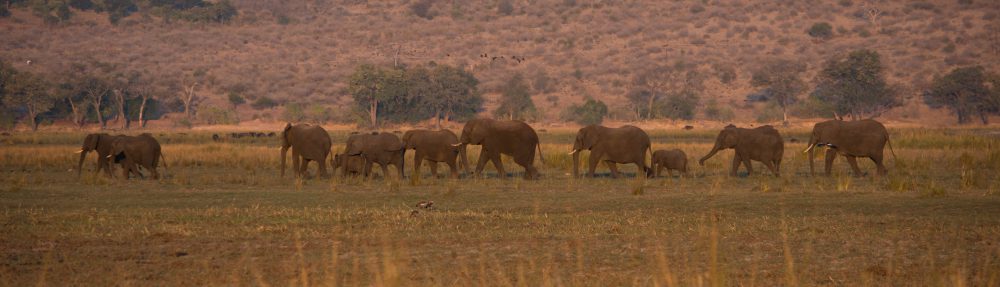
So that first sighting that first day in the field, on a landscape transformed by recent rains, we spotted a matriarch and her new babies and grand-babies wallowing in the mud. We sat with them as they played and bathed and rumbled the way elephants do. I felt that rumble permeate into my bones as some of the heaviness of the world I left behind lifted.
These animals will never cease to leave me in awe of the natural world.
This is the 4th time I’ve been at Kariega since the spring of 2024, and to be honest, I’m not in love with South Africa as a destination. To me, it feels closed and apportioned and entitled, and I always leave with the feeling that they’ve commoditized the wilderness here.
That said, Kariega feels like an oasis of potential. The reserve is trying to collaborate with its neighbours to connect private reserves into the Bushman’s River Biodiversity Corridor and eventually up to Addo Elephant National Park. But that kind of cooperation requires trust and wildlife management and a look at the problem from the animals’ perspective rather than a consumptive end goal. The result, if it works, is a natural corridor for elephants and other endemic species to roam and thrive and, ultimately, survive.
Fence removal works. Dr. Brooke Friswold, Africa Manager for Bring The Elephant Home, recently published a paper after researching the results of fence removal at Kariega. Results confirmed what she suspected all along: Removing fences helps elephants and ecosystems thrive:
Elephants moved into lower-density, higher-quality habitat after fence removal.
No additional vegetation loss occurred where elephants roamed.
Locomotion increased and foraging decreased, which was consistent with exploratory behaviour.
I’m conjuring up another blog post on what I’ve learnt from the herd. Elephants can teach us more about collaboration and empathy and respect than many of our so-called leaders these days. For the few hours I’ve got left as I write this, I’ll direct my thoughts back into the bush and with our herd.
When you’re a wildlife photographer with a bent towards waterbirds and megafauna and you’re in a relationship with a geologist with a penchant for, well, rocks, your holiday plans tend to be a sort of negotiation; sometimes even something of a continental divide (there’s a rift pun in there, I know it!). So when G semi-surprised me with a trip to Ireland for a long weekend to see puffins (and rocks), I was thrilled.
The other surprise was that it doesn’t get dark in Ireland (especially Northern Ireland) until close to 11pm. We effectively had 3 or 4 extra hours each day. This felt like a bonus: exactly what’s needed when you have next to zero time to research before getting on a plane. 🗺️Here’s a link to the map I made of the trip.
Arrival and County Antrim.
Day 1 was a nice drive from the airport in Dublin through a couple of the designated Areas of Outstanding Natural Beauty along the way. They did not disappoint. The coast is a magnificent contrast in extremes: sheer volcanic cliffs, stunningly green greens. The inland areas we passed through were vibrant and green, though it felt something like a patchwork quilt with the bulk of the trees stripped away to make room for the sheep.
We stayed 2 nights in Bushmills (whence the whiskey), which we were to learn is something of a gateway to the gateway to the Antrim coast. Also of note is that the Antrim coast is both seaside getaway and the bible belt of Northern Ireland, which makes Friday night make more sense.
Friday night: We arrived starving, so went into the quaint town of Bushmills to walk around, get our bearings, and find some dinner. There’s an old waterwheel, a walkway along the River Bush, which is stocked with salmon for the local fishermen (the river, not the walkway), and some really nice stone architecture. Overall, a charming ambiance to a solid-feeling old mill town. Dare I say stoney? As we were walking down the street, we ran into a triad of chatty teenagers, who foisted upon us chocolate chip cookies and an invitation to a BBQ and barn dance that evening.
After a dinner of the most gigantic fish and chips I’ve ever seen, we wobbled back out into town and towards the car – which just happened to be next to the Orange Hall where the barn dance was happening. And we just happened to run into two of the girls from earlier in the parking lot, who ushered us into the hall. I had a wave of déjà vu back to camp socials until the sea of people parted and a young, evangelical-type stood in the middle of the room and did a 15-minute talk on Jesus, excuses, reasons, and choices just as we were formulating our excuses (erm, reasons) to leave. I’m probably going to orange hell.
Afterwards, I learned of County Antrim’s deep Ulster-Scots/Presbyterian roots, and the Googles gave more info on the Orange Order as the civic/cultural/religious center of the region. So as we travelled through the area, it all came together and I lost count of the Orange Halls we passed along the way.
A boat…or three
The best place to see puffins on this part of the map is an island called Rathlin. Between the weather (rainy and windy) and the seas (choppy), we opted to walk around Ballycastle on Saturday morning, then make the best of a puffin boat tour in the afternoon.
Puffins, check. Spectacular shoreline and cliffs, double-check. But the sea was rough enough that trying to take action shots of small football-shaped flying things moving at 50mph was a challenge. I saved most of the photo shoot for the next day.
What the boat tour lacked in puffinocity, the cliffs and shoreline made up in rockdaciousness (a totally genuine term from a genuine Geologist. Probably). We went from Ballycastle (where the boat was), past castles and farms, to Giants Causeway, a UNESCO World Heritage Site and local legend (giants, bravado, babies, rocks, second thoughts…) where a spate of basalt columns form an amazing, stepped section that juts out into the sea. More walkway than jetty, it’s where the giant of geomythology built his causeway and hoodwinked a would-be invading giant that he was giant-er and sent the invader running home. Or something like that. In a geological sense, the basalt columns were formed by volcanic eruptions over the (softer) terrain, and subsequent cooling and fracturing of the rock. I’m sure I’ve butchered some part of that explanation, so will leave it to the geologist to fill in the cracks, as it were.
These formations, and the cliffs that soared hundreds of feet above where we stood, can really make you feel miniscule in the grand scheme of things; giants, legends, or otherwise.
We made our way to Portrush, a very odd holiday town (complete with Ferris wheel and a 100-year-old indoor amusement park!), for some dinner at a pub, then a side-quest to find the Dark Hedges. 250 years ago, a family planted hundreds of beech trees lining a long stretch of road. Over time, the branches intertwined to create a surreal arboreal tunnel flanking what’s now farmland. Game of Thrones lore turned this place into Kingsroad, and turned a quiet side street into an international tourist destination. That said, arriving at dusk (per recommendation) this time of year meant we arrived at 10:30 at night. We had the place to ourselves.
The next day we went back to Portrush and boarded a chartered RIB [Causeway Boats and skipper Richard: Highly recommend!] for a 3-hour tour that would take us water side around the Skerry Islands, along the Giant’s Causeway (very cool), and past Dunluce Castle, its frame still standing over 500 years later! All this on the way back out to Rathlin Island for a 2nd shot at better shots. It being a calmer day and a smaller boat, the puffining was markedly better.
Richard left us on Rathlin for the afternoon. The plan was to bus/hike/bike out to the bird sanctuary part of the island, shoot some puffins on land, and head back to catch the ferry back to Ballycastle. Of course the gods of poor planning intervened, so not only did we not have enough time to get to the bird place and back before the ferry, but it began to rain in earnest. So fish and chips and Guinness and a wander ‘round the little town would suffice for this trip.
After a bus ride from Ballycastle to Portrush (and again past some of the landmarks we had just seen from the water), we continued our journey south towards Galway, again grateful for the late sunsets because we were cramming a day and a half’s worth of adventuring into a normal afternoon.
The rocky place.
The next morning, we packed up the car and headed into The Burren, a geological wonder and UNESCO Global Geopark. Time didn’t permit a day hike, so we drove through the park, stopping at different sites to wander and learn. We stopped at the Poulnabrone Dolmen, a prehistoric tomb, dating back between 3800 and 3200BC (a conundrum to the orange people, I’m certain). Strewn across the countryside were ringforts, family compounds from medieval times, so G and I both got our rock fix: I got castles and ruins while G nerded-out in karst and limestone. The Burren literally means “the rocky place.”
We visited the village of Kilfenora and its very cool cathedral, and the Caherconnell Stone Fort for a walking tour through medieval history and a sheepdog herding demo.
The Cliffs of Moher was our last stop in The Burren, with one final view of nesting puffins, before heading into Dublin for our last night.
That classic Irish pub.
Because we were packing our days and on the move in the evenings, we hadn’t really experienced a pub that didn’t feel like we were being plopped inside everyone else’s beach town summer holiday. So when we wandered into the local pub, late and starving, and encountered an old-timer called Jack (and his pub-mates) drinking Beamish (Guinness’ boggier, earthier cousin), and Jack pointed us in the direction of a shop where we could get snacks and of course bring them back to the pub while we all shared laughs and stories until closing time, it really felt like the Irish magic was a crowning moment in our way-too-short trip.
So thank you, Orange teenagers, and the sweet lady at the B&B whose name I forgot, and Richard the sea captain, and Jack and Kevin and the other chatty guy at Ryan’s pub in Beggar’s Bush, for ushering in the sunshine and showing us your real Irish heart.
Two years ago, I had the privilege of doing an elephant research program with Bring the Elephant Home at the Kariega Game Reserve in the Eastern Cape of South Africa. We spent 10 days living and (literally) breathing elephants. Suffice to say that I was hooked! The focus of that program was research on herd and individual behavior after dropping internal fences at the Kariega Game Reserve. I wrote about that first trip here.
A year later I was back. The focus on my 2nd trip was individual ID and data collection for an AI app we were beginning to develop. More on that later.
Year 3 of elephant ID
So now I’m back in South Africa for a 3rd volunteer expedition. I’m happy to report that the herds seem to be thriving. Here are some initial observations from this go-round:
More mingling. We spent an hour watching 3+ herds come together and intermingle in a vibrant green valley one afternoon. Bukela, Beauty, Half Moon, their herds, the other minor matriarchs, and their herds socialized as Vula, in full musth, surveyed his new domain. It was an amazing sight to see 60+ of these magnificent beasts in one panorama.
So. Much. Joy. Without anthropomorphizing too much, I’d say the individual eles look joyful. After the meet-and-greet in the valley, a parade of elephants marched from there to the nearby watering hole. We watched elephants of all sizes frolic, blow bubbles, roll in the mud, socialize, bob, spray, dunk, and splash. There is no doubt in my mind that elephants love a good mud wallow. And even Vula dunked and played, musth and all. All of us in the vehicle were ear-to-ear grinning; the joy, contagious!
Kambaku left a legacy. Or 6. We spotted at least 5 new calves, born between Oct-Dec. Elephants have a 22-month gestation period, so it’s highly likely that these are Kambaku’s offspring. Elephant cows (females) prefer to mate with the most mature bull even if others are in musth. His legacy lives on.
Balu is growing into his own. It’s no mystery that my favorite elephant here is Balu. He is an adult bull, about 25 years old, with wavy ears and a cute, almost mischievous smile to his face. That spunkiness may get him in trouble, though, as he was also in musth this week. When we spotted him in the valley at the herd convention, he was very interested in the females until Vula stormed in and pushed him out. It was a scary moment or two for Balu, but he got the message and left. Fingers crossed he stays out of Vula’s way until their musth is over.
Technology to the rescue
The other update is our new mobile app. My real job is as a Learning Strategist on Microsoft’s Healthcare Copilot products. After the first program I attended, I was convinced that there had to be a way to use AI for elephant identification. One hackathon and a couple of years later, a small (but mighty) team of colleagues and I are partnering with the Microsoft AI for Good Lab, Conservation X Labs/WildMe, and Bring The Elephant Home to create an AI-powered elephant re-ID mobile app. [Re-ID is the science of identifying and monitoring a species in its natural habitat]. We tested a prototype of the app in the field during this trip, and we’ll be iterating and building over the coming weeks and months to fine-tune and launch. We’re sure that a mobile re-ID app will help citizen scientists and researchers alike identify and learn about the individuals and herds at their reserve.
Stay tuned for more details!
Want to learn more about BTEH and their volunteer programs?
I’m winding the calendar back a couple of weeks to where I’m killing time before my flight home, walking the back streets of the little neighborhood where I stayed. Little blue and green lizards are scurrying about. And chickens. And the roosters who have no sense of time. Two sandy but friendly pups come out to say hi with their little wiggle-butts, grateful for the pats on the exceptionally warm morning.
I take a dirt road which appears to go somewhere but really ends up in someone’s yard. In broken Spanglish I tell the lady sitting on her porch that I’m wandering and possibly lost but not really lost-lost. It’s a small place and there aren’t really that many roads. Everyone greets you with a smile.
I wander down to a part of the sidewalk that overlooks a corner of the beach, so I sit and let images of the undersea world dance through my brain as I look out to the sea of 7 colours.
I came down here to dive… and dive I did. I went in without expectations. Reefs across the warming planet are deteriorating and I really had no idea what to expect. Photos I’d seen of Providencia diving looked decent, but as last year’s I can’t even in Costa Rica proved, I didn’t get my hopes up.
Under the sea
I first started diving in this part of the Caribbean in the late 90s. The reefs were healthier, the massive building boom hadn’t gone into full swing yet, and the fishing industry hadn’t entirely decimated fish populations. Fast-forward a couple of decades, and while I still love to dive, it’s more and more a simultaneous feeling of gratitude and loss. The act of blowing bubbles as you explore an alien world is a privilege and an honor. Pretentious, maybe, to barge into this other world and expect a show. The corals are grayer than they used to be; the fish, fewer. But that said, it’s all thriving despite what’s being thrown at it.
There were curious reef sharks, and eels of all shapes and sizes (even a sharptail). Sandy bottoms held stingrays and garden eels, and blennies and those shy little jawfish, remodeling their holes with tiny rocks. The reefs were alive with schools of snappers and chromis. And deeper down, there were lobsters and crabs hiding in the wall, big groupers, and even some Atlantic spadefish looking regal and eerie at the same time. The usual Caribbean suspects: filefish and parrotfish and triggerfish… and some welcome sightings of cowfish (one of my favorites), trumpetfish, and an assortment of butterflyfish and hamlets, even a sighting of the masked hamlet, a species endemic to Providencia.
On a night dive, I watched a giant snapper use the light of our torches to hunt a blue tang (and amazingly eat the thing in 3 bites!). And I saw my first hammerhead, albeit a young one in fairly shallow waters.
Part of diving is the shared feeling of exploration with your boatmates, and the awe and wonder after each dive. Every dive is magic. Every dive is a gift. You make instant connections in the dive shop, and quite often new friends that remain even after the adrenaline fades.
At the surface
I took a boat to see the land from the sea. It turned out to be a “snorkeling tour”, bouncing from bay to bay to snorkel and sight-see. We visited Fort Bay and Morgan’s Head, then rounded the top of the island, where McBean Lagoon National Park comprises the northeast part of Providencia. The mangroves by the airport, Cayo Cangrejo, and the Tres Hermanos islands are all protected by the park, and that’s what I was really keen on seeing.
Crab Caye is a tiny island ringed by a reef, so it is a snorkeler’s dream (since you aren’t allowed to dive there). There were Portuguese man-o-war sightings that day, so I opted to walk to the lookout tower at the top (said tower was blown off during the hurricane, so it was a walk to the base of the tower), then watch the snorkelers bob in the shallows as I sipped a highly-recommended fresh coconut water. From here we continued on to Tres Hermanos, which is home to a nesting colony of frigatebirds. Later in the trip, I’d ask a different boat captain to take me back there with my big girl camera to capture some shots. We snorkeled in the bay between Tres Hermanos and the mangroves (look, squid!), and looped south and finally back to South West Bay.
Even though the snorkeling was decidedly “meh” on my tour, the boat ride was super-nice. And so, on the recommendation of one of our divemasters (everyone knows everyone here), I found a guy with a boat who could take me back to Tres Hermanos to do some frigateography.
We ventured as far as we could into the mangrove lagoon before it got too shallow and we had to pole it out of there. Much of the mangroves were destroyed in the hurricane, but they’ve made a huge effort to protect and tag the fledgling mangrove trees. They’ll be back! After the mangrove adventure, we spent quite a bit of time slowly circling one of loshermanos, the island that the frigatebirds call home.
The magnificent frigatebird, as I stated in an earlier post, looks (and acts) like a cross between a seagull and a vulture. First of all, they are enormous, with a wingspan of up to 2-1/2 metres (nearly 8’!). Second, they nest communally, and very close to the water, so their nests look like a frenzy of black and white and red feathers. The sky looks like a swirl of small aircraft. The males have this wattle that they expand as a mating ritual, and the females (smaller and way less showy) have a white head and throat. I could have stayed out there for hours just watching the frenzy but feared the captain would get bored out of his mind! While they will fish for their own food, frigatebirds prefer to steal what they can from fishermen and other waterbirds, and they are considered “kleptoparasites” in the scientific world: they pester other birds until they give up their prey.
Sure, on paper the magnificent frigatebird is kind of a disgusting jerk; but I was mesmerized watching them interact on their island home nonetheless.
As I sat there on the sidewalk that looked out over the beach, frigatebirds and sharks and little magic moments swirled in my mind. A little while later, a lady on a motorbike drove by and stopped to sell home-made ice pops from the cooler on the back. A little while after that, after saying goodbye to the guys at the dive shop and my new diver friends, I stopped by the little blue bakery to get some banana bread for the trip home.
I’m finishing this post after a fresh foot of snow has fallen back at home, and I’m wondering whether I should have just chucked it all and stayed. But I also think that the stories and the feeling of a place remain with you. And it’s these that will warm me in the cold winter months ahead.
I’m already at work on the next adventure, as any girl with a wandering spirit must be. So here’s to sunny days, wide-winged birds, and a large dose of natural wonder and undersea magic!
🤿🐡🪸🐟 Many thanks to the island of Providencia for having me and to the amazing team at Sirius Dive Shop for making every dive an experience to remember. 🐠🫧🪸🦈🏴☠
I’m finalising this post on a frigid night in New England, looking out my window to 2 feet of fresh-fallen snow. So I’m writing with a slightly ironic bent about time travel and other worlds and feelings of fernweh and reentry, all simultaneously.
The day I touched down in Bogotá, the wackadoodle leadership of the country that issues my blue-bound passport kidnapped the president of Venezuela and was making googly eyes at Colombia. To be honest, I had zero idea how this trip was going to play out.
See Azul y Tranquilidad, Part I: Transport and Arrival.It ended up being fine… almost too fine – as if everyone around me was also on holiday and couldn’t be bothered to worry about the intercontinental political chaos playing out in the seas and land not so far away. I was here to partially shower off the emotional overload of the past months, and overdose on my much-needed vitamin sea. The ocean cures all.
Vacation mode activated!
So here I was, on a tiny dot in the middle of the Caribbean, an island surrounded by a barrier reef and a sea so sparkly that it over-earns its nickname of The Sea of Seven Colours. [Note: this BBC article was written about a month before Iota, a cat-5 hurricane, flattened Providencia. They are still rebuilding 5 years later.]
Rather than describe a series of days that acquired a comfortable tempo of sameness (wake-up, brekkie, diving, surface interval, more diving, banana bread, hammock, nap, wandering, dinner, sleep), I want to write about the feeling of the place. The déjà-vu spidey-sense I had from the moment I stepped off the San Andrés to Providencia plane and walked across the humid tarmac into the little island airport.
Déjà-vu.
I went to Belize for the first time in 1999. It was a few months after Hurricane Mitch had wrecked parts of Ambergris Caye, so I saw it before the rebuilding and the international tourists wreaked their storm surge on the island. Don’t mess with natural nature, an old Belizean said to me one late night, Belikin in hand, around a fire on the beach. After that first visit, I made a lot of trips to Belize and other parts of Central America. My Spanish was better back then, but that quote floats back to me a lot.
Arrival in Providencia felt like that time and place. The air was salty and warm, like a seaweed-infused hug. Frigatebirds circled in a brilliant blue sky. Motor scooters zoomed by. Palm leaves swayed in the sea breeze. As the taxi shuttled me towards the town of South West Bay (if a 15-sq km place is big enough for “towns”), I noted the lots still roped off and the houses and hotels still semi-smashed from Iota who visited Providencia in Nov of 2020 just as they were just recovering from Covid.
It felt like I needed to write about this place as a string of anecdotes and impressions rather than a rundown of experiences.
Colombian coffee and petrichor.
I don’t drink coffee, but the wonderful guest house I stayed at [South West Bay Cabañas] made a perfectly simple breakfast every morning, complete with a pot of freshly-brewed Colombian coffee and a side of steamed milk. I mean, how could one not indulge. The hotel was simple but comfortable and it didn’t even occur to me that my room didn’t have TV or cable until I re-read their website… apparently if you want that, you book a fancier room on the 2nd floor. But the hammock on my veranda, their resident iguanas, and the constant birdsong (hello, bananaquit!) helped me settle into a routine of afternoon siestas and walks to and from the dive shop on South West Beach. The accommodation was “just enough” and just what I needed… well, after I remembered that it’s hard to find a hot water tap in this part of the world, and that showers are best taken in the late afternoon to give the sun god time to warm up the rainwater in the basin.
And it rained, almost daily: those fierce tropical showers that last for 20 minutes and leave the air feeling thoroughly laundered and the greenery greener, depositing in its wake a rainforest-y petrichor that permeates the senses.
I took a walk one afternoon to see what I could find. About 7 minutes into my walk, the giant drops started to fall. “¡Ven aquí!” “Come up!” I heard shouted from a house. A little man invited me to his porch to sit with him and his family while we watched the rain come down. We watched the drops land as small water balloons. We looked at iguanas in the trees across the way. Wafts of spice emanated from the little kitchen. He told me stories about how the family hid in the bathroom for 12 hours while the hurricane blew the house down around them.
Exploring a pirate island.
Santa Catalina is a small island offshoot on the north end of Providencia. You can only get there by foot, over the “lovers bridge”, which welcomes you to the island with a colorful pirate greeting. Privateer Henry Morgan (THE Captain Morgan) was said to have used Santa Catalina as a hideaway, and some even believe that a portion of his treasure is still hidden there. So I took a day and wandered from Providencia’s “downtown”, through the remnant holiday decorations, and over the bridge to Santa Catalina. After a short walk along the water, you go up a steep staircase to a viewpoint with some cannons that date back to the 1600s and the pirates who occupied the island. Is the loot buried up here? Another staircase takes you down to Fort Beach and a view out to Morgan’s Head, a rock formation named for Santa Catalina’s illustrious buccaneer. I would end up snorkeling in these waters a few days later, getting views from all sides. It was quiet and lush…as I looked out across the water from next to a cannon, a pirate voice rumbled in my head, “arrr…that’s a great view!”
Where the birds go in winter.
On the walk where I got caught in the rain, I ended up taking a path that led behind a school and to a cove where fishermen tie up their boats for the evening. The last fisherman was throwing some fish guts for the frigatebirds to snack on. In the fray, I spotted some locals. By locals, I mean my locals: semipalmated plovers and sanderlings and ruddy turnstones. I stayed in that cove for a while, like bird paparazzi, and watched the frigatebirds and shorebirds mix and mingle. Frigatebirds are like a cross between a seagull and a vulture, with neck wattles that expand like balloons to impress the ladies during courtship rituals. So of course I was mesmerized…I mean, who wouldn’t be? The day turned into a bird-watching adventure… I logged some new birds, took too many photos, and fulfilled some of my bird-geek needs for the week. There were even a couple of our warblers there, like me, to warm their feathers.
And the best food is…
There’s a lady who sets up an empanada stand on the little road that goes up to the little supermarket, off the (only slightly less-little) road that goes down to the beach. The stand opens at some point in the late afternoon each day and closes when all of her goodies are gone. She sells empanadas filled with langosta (lobster), cangrejo (crab), pescado (fish), and sometimes pollo (chicken) as well as these little croquetas (fish balls). I stumbled upon her stand one evening, half-way into my trip and ended up eating her empanadas for dinner 3x in a week! And when I mentioned her stand to one of the divemasters at the dive shop, opining that she sells maybe the best empanadas on the planet, all he said back was, oh yeah. It’s funny when you discover a local gem that the locals (or guidebooks) didn’t even have to recommend.
I was on a mission to find a favorite ceviche de caracol (conch ceviche) while I was there. Even though I only tried 4 different iterations (every chef has their own twist on the classic), there was a hands-down winner: the “first restaurant on the beach” at South West Beach. They add a little tomato paste, and what tastes like tamarind, to make it unique. Of course I need to try to recreate it at home (though will probably try with shrimp!).
Every meal or snack felt like fiction: The empanadas. The coconut ice pop from a cooler on the back of a lady’s motor scooter. The ceviche. A coconut lemonade while watching the sunset. The banana bread from the panadería on the road to South West Beach…hot from the oven and served in tin foil, which keeps it warm an hour later. If there were awards given for simple, pure, magical food, the empanadas and banana bread would win the gold.
I went to Providencia seeking escape from the cold and immersion in the warm…in culture and water and food and welcome. It worked…and I could go back tomorrow.
I’m going to save the waterplay for Part III, as I’m still curating photos.