About Lesli W.

Yogini, photographer, writer, wanderer, wonderer, philosophizer, dog's best friend, reluctant but sometimes sparkly introvert, curious one, believer in magic.

Azul y Tranquilidad, Part II: A Sort of Déjà-vu

I’m finalising this post on a frigid night in New England, looking out my window to 2 feet of fresh-fallen snow. So I’m writing with a slightly ironic bent about time travel and other worlds and feelings of fernweh and reentry, all simultaneously.


The day I touched down in Bogotá, the wackadoodle leadership of the country that issues my blue-bound passport kidnapped the president of Venezuela and was making googly eyes at Colombia. To be honest, I had zero idea how this trip was going to play out.

See Azul y Tranquilidad, Part I: Transport and Arrival. It ended up being fine… almost too fine – as if everyone around me was also on holiday and couldn’t be bothered to worry about the intercontinental political chaos playing out in the seas and land not so far away. I was here to partially shower off the emotional overload of the past months, and overdose on my much-needed vitamin sea. The ocean cures all.

Vacation mode activated!

So here I was, on a tiny dot in the middle of the Caribbean, an island surrounded by a barrier reef and a sea so sparkly that it over-earns its nickname of The Sea of Seven Colours. [Note: this BBC article was written about a month before Iota, a cat-5 hurricane, flattened Providencia. They are still rebuilding 5 years later.]

Rather than describe a series of days that acquired a comfortable tempo of sameness (wake-up, brekkie, diving, surface interval, more diving, banana bread, hammock, nap, wandering, dinner, sleep), I want to write about the feeling of the place. The déjà-vu spidey-sense I had from the moment I stepped off the San Andrés to Providencia plane and walked across the humid tarmac into the little island airport.

  • View out of a propellor plane window of an island with a bridge surrounded by bright blue water.
  • view out the window of a propellor plane and clouds
  • view of a small tropical airport with a green hill in the background

Déjà-vu.

I went to Belize for the first time in 1999. It was a few months after Hurricane Mitch had wrecked parts of Ambergris Caye, so I saw it before the rebuilding and the international tourists wreaked their storm surge on the island. Don’t mess with natural nature, an old Belizean said to me one late night, Belikin in hand, around a fire on the beach. After that first visit, I made a lot of trips to Belize and other parts of Central America. My Spanish was better back then, but that quote floats back to me a lot.

Arrival in Providencia felt like that time and place. The air was salty and warm, like a seaweed-infused hug. Frigatebirds circled in a brilliant blue sky. Motor scooters zoomed by. Palm leaves swayed in the sea breeze. As the taxi shuttled me towards the town of South West Bay (if a 15-sq km place is big enough for “towns”), I noted the lots still roped off and the houses and hotels still semi-smashed from Iota who visited Providencia in Nov of 2020 just as they were just recovering from Covid.

It felt like I needed to write about this place as a string of anecdotes and impressions rather than a rundown of experiences.


Colombian coffee and petrichor.

I don’t drink coffee, but the wonderful guest house I stayed at [South West Bay Cabañas] made a perfectly simple breakfast every morning, complete with a pot of freshly-brewed Colombian coffee and a side of steamed milk. I mean, how could one not indulge. The hotel was simple but comfortable and it didn’t even occur to me that my room didn’t have TV or cable until I re-read their website… apparently if you want that, you book a fancier room on the 2nd floor. But the hammock on my veranda, their resident iguanas, and the constant birdsong (hello, bananaquit!) helped me settle into a routine of afternoon siestas and walks to and from the dive shop on South West Beach. The accommodation was “just enough” and just what I needed… well, after I remembered that it’s hard to find a hot water tap in this part of the world, and that showers are best taken in the late afternoon to give the sun god time to warm up the rainwater in the basin.

  • iguana on the grass with a cabana in the background
  • iguana in the grass
  • back view of an iguana
  • view of palm trees from a veranda
  • bananaquit bird in a tree

And it rained, almost daily: those fierce tropical showers that last for 20 minutes and leave the air feeling thoroughly laundered and the greenery greener, depositing in its wake a rainforest-y petrichor that permeates the senses.

I took a walk one afternoon to see what I could find. About 7 minutes into my walk, the giant drops started to fall. “¡Ven aquí!” “Come up!” I heard shouted from a house. A little man invited me to his porch to sit with him and his family while we watched the rain come down. We watched the drops land as small water balloons. We looked at iguanas in the trees across the way. Wafts of spice emanated from the little kitchen. He told me stories about how the family hid in the bathroom for 12 hours while the hurricane blew the house down around them.

  • colorful bus stop in providencia with a manta ray roof
  • save our beach sign with a beach in the background
  • tropical houses
  • air plant in a tree
  • colorful artwork surrounding a tree at Bottom House, Providencia
  • white-headed pigeon in a tree

Exploring a pirate island.

Santa Catalina is a small island offshoot on the north end of Providencia. You can only get there by foot, over the “lovers bridge”, which welcomes you to the island with a colorful pirate greeting. Privateer Henry Morgan (THE Captain Morgan) was said to have used Santa Catalina as a hideaway, and some even believe that a portion of his treasure is still hidden there. So I took a day and wandered from Providencia’s “downtown”, through the remnant holiday decorations, and over the bridge to Santa Catalina. After a short walk along the water, you go up a steep staircase to a viewpoint with some cannons that date back to the 1600s and the pirates who occupied the island. Is the loot buried up here? Another staircase takes you down to Fort Beach and a view out to Morgan’s Head, a rock formation named for Santa Catalina’s illustrious buccaneer. I would end up snorkeling in these waters a few days later, getting views from all sides. It was quiet and lush…as I looked out across the water from next to a cannon, a pirate voice rumbled in my head, “arrr…that’s a great view!”

  • colorful entrance to Santa Catalina island
  • christmas decorations on Providencia
  • view of a bay in santa catalina island
  • view of fort bay in santa catalina
  • old mosaic map of the caribbean
  • view of morgan's head
  • view of santa catalina and the footbridge from providencia
  • view of santa catalina from the end of the footbridge at providencia

Where the birds go in winter.

On the walk where I got caught in the rain, I ended up taking a path that led behind a school and to a cove where fishermen tie up their boats for the evening. The last fisherman was throwing some fish guts for the frigatebirds to snack on. In the fray, I spotted some locals. By locals, I mean my locals: semipalmated plovers and sanderlings and ruddy turnstones. I stayed in that cove for a while, like bird paparazzi, and watched the frigatebirds and shorebirds mix and mingle. Frigatebirds are like a cross between a seagull and a vulture, with neck wattles that expand like balloons to impress the ladies during courtship rituals. So of course I was mesmerized…I mean, who wouldn’t be? The day turned into a bird-watching adventure… I logged some new birds, took too many photos, and fulfilled some of my bird-geek needs for the week. There were even a couple of our warblers there, like me, to warm their feathers.

  • colorful artwork surrounding a tree at Bottom House, Providencia
  • white-headed pigeon in a tree
  • chicken and chick
  • semipalmated plover and ruddy turnstone on a beach
  • sandpiper on a beach
  • semipalmated plover and ruddy turnstone on a boat
  • spotted sandpiper picking at fish entrails on a beach
  • a group of ruddy turnstones on a boat
  • a small island off Providencia
  • sanderling on a boat rail
  • view of boats in a bay
  • close up of a frigatebird
  • frigatebird with food in its mouth over the water
  • frigatebird with food in its mouth over the water with an island in the background
  • 2 frigatebirds trying to steal food from another one
  • 2 frigatebirds trying to steal food from another
  • 2 frigatebirds trying to steal food from another
  • frigatebird flying over a beach with boats in the background
  • birds on a colorful boat
  • small cove with boats and an island in the background
  • air plant in a tree

And the best food is…

There’s a lady who sets up an empanada stand on the little road that goes up to the little supermarket, off the (only slightly less-little) road that goes down to the beach. The stand opens at some point in the late afternoon each day and closes when all of her goodies are gone. She sells empanadas filled with langosta (lobster), cangrejo (crab), pescado (fish), and sometimes pollo (chicken) as well as these little croquetas (fish balls). I stumbled upon her stand one evening, half-way into my trip and ended up eating her empanadas for dinner 3x in a week! And when I mentioned her stand to one of the divemasters at the dive shop, opining that she sells maybe the best empanadas on the planet, all he said back was, oh yeah. It’s funny when you discover a local gem that the locals (or guidebooks) didn’t even have to recommend.


I was on a mission to find a favorite ceviche de caracol (conch ceviche) while I was there. Even though I only tried 4 different iterations (every chef has their own twist on the classic), there was a hands-down winner: the “first restaurant on the beach” at South West Beach. They add a little tomato paste, and what tastes like tamarind, to make it unique. Of course I need to try to recreate it at home (though will probably try with shrimp!).

  • ceviche de caracol in a colorful dish with fried plantains
  • bakery on a providencia street
  • the empanada lady standing with her cart

Every meal or snack felt like fiction: The empanadas. The coconut ice pop from a cooler on the back of a lady’s motor scooter. The ceviche. A coconut lemonade while watching the sunset. The banana bread from the panadería on the road to South West Beach…hot from the oven and served in tin foil, which keeps it warm an hour later. If there were awards given for simple, pure, magical food, the empanadas and banana bread would win the gold.


I went to Providencia seeking escape from the cold and immersion in the warm…in culture and water and food and welcome. It worked…and I could go back tomorrow.

I’m going to save the waterplay for Part III, as I’m still curating photos.

Azul y Tranquilidad, Part I: Getting to Providencia, a little island in the middle of the blue.

19 Jan 2026: I am channelling blue. Or, more precisely, the 7 (+/- 3) shades of blue that surround a little island I didn’t know existed 8 weeks ago.

A panoramic view of a turquoise ocean under a clear blue sky with scattered clouds, seen from a rocky shore with greenery in the foreground.

Rewind to the beginning of December: I needed a break from my computer. My inner mermaid was screaming to return to her home planet. My bones were cold. I needed to tune out work and the real world and the endless blather from every form of media. I needed a return to the blue.


A plan is hatched.

A conversation with an old friend put me in touch with a dive instructor on a little-known island called Providencia; part of Colombia, but geographically closer to Nicaragua. Its history is that of pirate island, and an English, then Spanish, territory before Colombia’s independence in the 1800s. Privateering was Providencia’s chief business for a while, and rumours abound of treasure still hidden on the tiny island to this day. In 2007 UNESCO incorporated the archipelago of San Andrés, Providencia and Santa Catalina into their network of Caribbean biosphere reserves, calling it Seaflower.

Before the dot-com boom and bust and well before online travel blogs were really a thing, I spent a lot of my vacation time diving in Belize and Honduras. This was also before the hordes of tourists and the warming of the waters and the multi-story luxury resorts built on the edge of atolls that really can’t support the growth. The pristine reefs in that part of the Caribbean have grayed and crumbled over the years; apparently capitalism is an exemption in environmental protection.

So when I read about Providencia, it resonated like a glimmer of hopeful azul in a long, cold, gray December. It was small enough to be overlooked by the masses, cherished just so by its denizens, and hard enough to get to that most of the cringey tourists wouldn’t bother. Also, aside from beaching and diving and snorkeling and climbing The Peak, there wasn’t a heck of a lot to do there. I booked flights as soon as I saw photos.


Rusty Spanish and a small glitch.

To get to Providencia, you need to go through San Andrés. Luckily Avianca flies direct to Bogotá from Boston; and while it feels like a world away, Colombia is in the same time zone as the Eastern US. So the flight from Bogotá to San Andrés was also relatively straightforward. The small oopsie: In the chaos of work-holiday-family-new year before the trip, I had completely forgotten to apply for my Check-MIG (tourist visa). So as the BOS-BOG flight taxied to the gate in Bogotá, I furiously entered my info into the web form then held my breath. Exhale: The acceptance email arrived as I was walking to the immigration line. This level of stress is not highly recommended. The other thing that nobody tells you unless you dig for the info (which I didn’t), is that you need a tourist card to enter the reserve area, so with rusty Spanish I navigated to the kiosk to get mine just in time to board the flight to San Andrés.

I stayed in an eco-hostel on San Andrés for a night, a quirky little hotel built into an ancient coral reef, before waking to take the final hop to Providencia (The Rock House: I highly recommend!). Even though I only spent one short night there, I felt welcomed and safe from the moment I arrived. As solo female travellers know, this is such a relief…one less thing to stress over, giving back some emotional energy to focus on that last leg.

View out of a propellor plane window of an island with a bridge surrounded by bright blue water.

Note to travellers: always check and re-check flight times… the flight was changed to leave 20 minutes early! But I made the flight, understood enough of the in-flight announcements (100% en Español), found a taxi, and made it to my little hotel in South West Bay in time to unpack, find the dive shop, and take a small nap in my hammock before sunset.

A small regional airplane parked on an airport tarmac with a green mountain in the background and a clear blue sky.

I hadn’t intended on writing a whole post on just the getting there process, pero aqui estamos (but here we are). Thanks for coming along on the beginning of this journey with me.


In Part II we’ll dive into Providencia. Literally.

2026 Calendars are here!

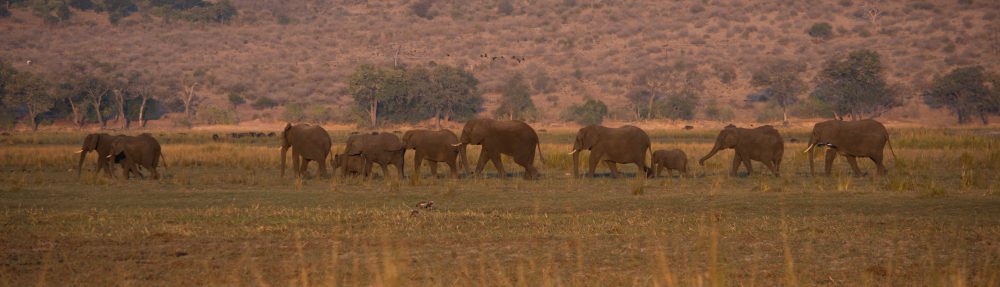
This year, I’ve decided to dedicate a portion of the proceeds of my annual calendar to the amazing research and conservation work Bring The Elephant Home is doing on elephant behaviour, habitat, and wellbeing in South Africa and Thailand (and soon other parts of Africa, like Zimbabwe, Uganda, and more!).

The calendars are available in my photography shop. Just select the SHOP button, go to Specialty Products, and scroll down to the calendars.

Currently, I’m only able to ship within the US, but send me a note if you’re out of the US and want a calendar…we’ll figure something out.

While you’re in my photography shop, browse around… you may find something fun as a holiday gift. The photo lab I use does amazing prints, and we can ship pretty quickly for holiday gifts.

Thanks, and have a great day!

I visited Dachau and Oktoberfest in the same day. I sort of recommend it.

Dachau is the first concentration camp that I’ve seen, and even though I’ve learned about the depths of depravity we humans are capable of by reading about the horrors and visiting the Rwanda Genocide Museum, by visiting the old slave market in Stone Town, by walking through Berlin and learning about the Holocaust in school and in Germany in an unapologetic way, it felt important to see this place, to walk through the ghosts of things that should not have happened.

Ditto, Oktoberfest. I mean, it felt important to go. I’ve been in Munich a few times (even when the Wiesn was in full swing). I love Germany. Aachen feels like my 2nd home. Yet for some reason, Oktoberfest has never been on my list… But this time there was time in the itinerary, so why not.

That these two juxtaposed realities can exist in the same plane of existence is both appalling and yet somehow not entirely unexpected.

  • old-ized image of entry gate to Dachau
  • entry gate to Dachau
  • memorial sculpture at the Dachau concentration camp, with 1933-1945 inscribed
  • memorial at Dachau
  • view of main building at Dachau through gate
  • Dachau main viewing grounds
  • people walking through Dachau gate
  • Display of armband symbols at Dachau
  • Front of Dachau main building
  • Guard house at Dachau

The words arbeit macht frei (work makes you free) are wrought into the iron in the entry gate at Dachau. It was a work camp more than a death camp, though the calculated deliberateness of the atrocities and the hypocrisy of the arbeit makes it very clear why chiefs from this camp went on to do even more evils at Auschwitz and others.

Walking the grounds and exhibits, in their brutal honesty, makes you realise that as horrible as the recounting was, it was sanitized for the sake of the viewer. Sanitized, for fucks sake. What actually happened there was far worse.

It was a gray, semi-rainy late-September morning. By the time we left, I was cold. My feet hurt. I was hungry. I needed a shower. Absurd first-world problems by any measure. Unfathomable, by today’s.

A cold, almost metallic, shiver stayed with me throughout the gray morning, and I couldn’t get the word hypocrisy out of my mind as I tried to align the thoughts this should not have happened with how close are we now to the timeline then?

It was a quiet bus-then-train ride back to the hotel, where a shower felt a little more decadent than the day before and a snack of some day-old bread was a luxury in a real world that felt so surreal and undeserved after the morning.

Rhetorical question: How can we simultaneously release ourselves from the past while living with empathy and integrity and inclusiveness so that history doesn’t get the chance to repeat itself?


Genuss lässt dich vergessen (indulgence/enjoyment makes you forget) is written nowhere that I’m aware of, yet the visions of the morning dissipated as we meandered the streets of Munich and wended our way to the Theresienwiese, the Oktoberfest fairgrounds. Along the way we saw lederhosen-clad revellers on electric scooters, dirndl-dressed Fräulein, and oodles of others dressed in traditional garb and less-so.

We had been with German friends for the past week and a half, all of whom joked and rolled their eyes that we wanted to go to Oktoberfest; all of whom suggested visiting the more authentic Oide Wiesn.

So we entered the fairgrounds via the Oide Wiesn, the historic Oktoberfest, in hopes of avoiding some of the chaos outside these gates. It felt like a state fair, only 11,000 times bigger, replete with enormous beer tents and oompah bands and Bavarian folk dancing. As one does, we indulged a bit: drinking steins of local beer, eating Bavarian pretzels and Fischbrötchen, riding the Willenborg Ferris wheel, and maybe the best part, peoplewatching, because the outfits and the mayhem truly make the day.

Traditional Bavarian folk dance in a beer tent at Oktoberfest

The Oide Wiesn felt like the safe place, as venturing into the wilds of the main Oktoberfest madness felt like a frat party on steroids. We ducked in and out of beer halls and played “spot the American tourists” (inebriated 20-somethings in rented lederhosen with stuffed chickens on their heads…I am not kidding) and “dodge the detritus” (unfortunate results of said inebriation) enough to call it quits for the day and head to the exit with one final auf Wiedersehen to the experience.

  • Oktoberfest beer tent
  • Beers in the foreground in an Oktoberfest beer tent
  • an array of decorated gingerbread hearts at Oktoberfest
  • Aerial view of Oktoberfest
  • beer tent at Oktoberfest
  • swings at Oktoberfest
  • Oktoberfest view with ferris wheel

It doesn’t make a lot of sense to visit the polar extremes on the humanity spectrum in the same day…But maybe it does. Maybe they both teach us lessons on balance and compassion and bramacharya, restraint.

  • Be kind.
  • Don’t let apathy win.
  • Indulge…but not to excess.
  • Practice equity and empathy and compassion.
  • Laugh…at yourself before others.
  • Live modestly.
  • Love generously.
  • Learn rabidly.

Bringing down fences: one year on.

I started writing this post on a dark plane flying North over the African continent, visions of elephants and African wildlife swimming in my head. Now I’m home, back from another trip to Kariega with the BTEH team to do additional observations and work on an exciting elephant ID project that blossomed from that first trip.

How it started: I went down to South Africa last March sort of blindly. I had signed up for a volunteer program with an NGO called Bring The Elephant Home to help the researchers do behavioural studies on elephants at Kariega Game Reserve in the Eastern Cape. We spent 10 days there, in the field and in the classroom, learning about and studying these amazing creatures. Just a few months before that trip, they had removed the interior fences in the reserve, so one of the key questions we tried to answer was “what happens with the eles when you remove fences?” I wrote about that amazing experience here.

Fast-forward a year and a few months, and these elephants have been living in their expanded habitat for some time now.


5 observations after another 10 days in the field:

The herds seem to be thriving. There are new-ish calves and lots of mud wallowing. The eles really seemed jovial and happy.

  • individual elephant on lush background
  • baby elephants with adult in background
  • elephant in bush
  • picture of elephant and her calf
  • single elephant in the bush
  • close-up of elephant face

All the herds seem to be spending a lot of time in the Harvestvale section of the reserve. There are still 3 matriarchs with GPS collars (Half Moon, Beauty, and Bukela), and the BTEH team has tracked them over the past year in a sort of migration pattern with the seasons. Last year, Bukela’s herd was very cautious about crossing over into their new territory, so it could be that the Kariega West herd has benefitted most with the new habitat.

They’ve made new friends and acquaintances. One of the most beautiful things to observe was that all the herds seem to be affiliating, if not intermingling. Time will tell whether this leads to new mini-herds or one giant one.

elephant herd in lush bush

The bulls are roaming about in bands of 2s and 3s, and even these guys have crossed clans. We observed Matchstick hanging around with Holy Moly, and Sean (one delegate from each of the herds). Maybe Matchstick (from Harvestvale) is playing mentor – or host – to the other two (from KW).

Kambaku was in musth. He’s from the Kariega West side. It seemed probable that he mated with Mavis (from Harvestvale), so the bulls are probably enjoying the fact that they have more ladies to choose from.

large bull elephant with herd

Exciting news.

Last year, I left feeling like there had to be an easier way to ID individual elephants. So I organised a Hackathon team to work on an AI model that would help speed up and automate the identification process. While we didn’t fully solve the problem for Hackathon, we came close… and that led to a partnership of sorts between our Hackathon team, Bring The Elephant Home, Microsoft’s AI for Good Lab, and WildMe, the internationally-known NGO that works to identify and track endangered species worldwide. To date, WildMe’s WildBook population monitoring doesn’t have elephants in their re-ID model because they didn’t have a large enough data set to train the AI. So through this collaboration we are going to first train their re-ID model to include elephants, and then work on a mobile app that can be used in the field.

To say that we are very excited is an understatement!


More exciting news.

All research points to the fact that habitat expansion leads to thriving herds, lower environmental impact, less human/elephant conflict, less human intervention needed for elephant population control, and a healthier ecosystem for many of the interdependent species in the area. Together with the Elephant Reintegration Trust, BTEH is working on creating the world’s first elephant rewilding reserve. BTEH also supports initiatives to create an “elephant corridor” in the Eastern Cape that aims to pull down more fences between private reserves and build a network of connected wild spaces up to Addo National Park.

This year’s program felt like both a summation of research as well as a lens into the future. Many thanks to Antoinette and Brooke at Bring The Elephant Home for creating these exciting programs to promote elephant wellbeing and more successful human-elephant coexistence.

More to follow, with photos and stories, from an amazing 10 days with the elephants and the BTEH volunteer team.